
 Cycling
 Winter
 Running
 Hiking
An electric bike helps reduce physical strain and increases your range on every ride. How much the e-bike helps is entirely up to you.
The assistance can support you up to a speed of 25 km/h, but it can also be switched off and used only when you run out of energy. Charging the battery is easy – a standard 230V socket or a charging station will do the job. There’s really nothing to worry about! Read on to find out in which situations an e-bike is ideal and how to choose the right one.
Choosing an e-bike can seem like a complicated process. In the Czech Republic alone, there are over 1,500 models of e-bikes from more than 50 brands. And every year, new model ranges are introduced with updates and new color variants. So how do you pick the right e-bike?
Imagine walking into a physical store where we sit down together and talk about your wishes and needs in order to choose the ideal e-bike. Sometimes it’s better if you already have a rough idea in mind before coming in, and then we fine-tune the details. That’s why we’ve written this guide – so we can go through the key topics together from the comfort of your home. Choosing the right e-bike will then be a breeze:
Where will you ride most often?
There are several types of e‑bikes depending on their intended usage. From city bikes for street riding to full-suspension models designed to tackle demanding terrain. Choose the category that best suits your favorite routes, for example:
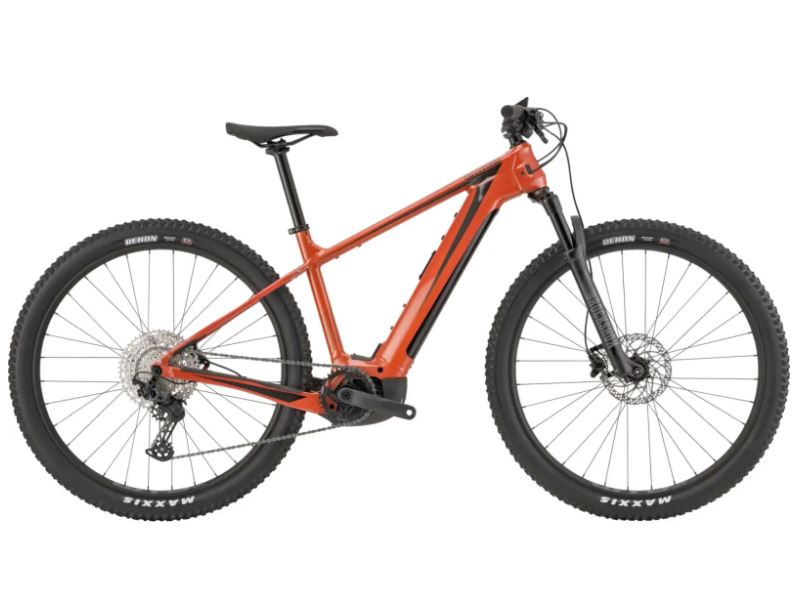
The most widespread category of e‑bikes are mountain e‑bikes.
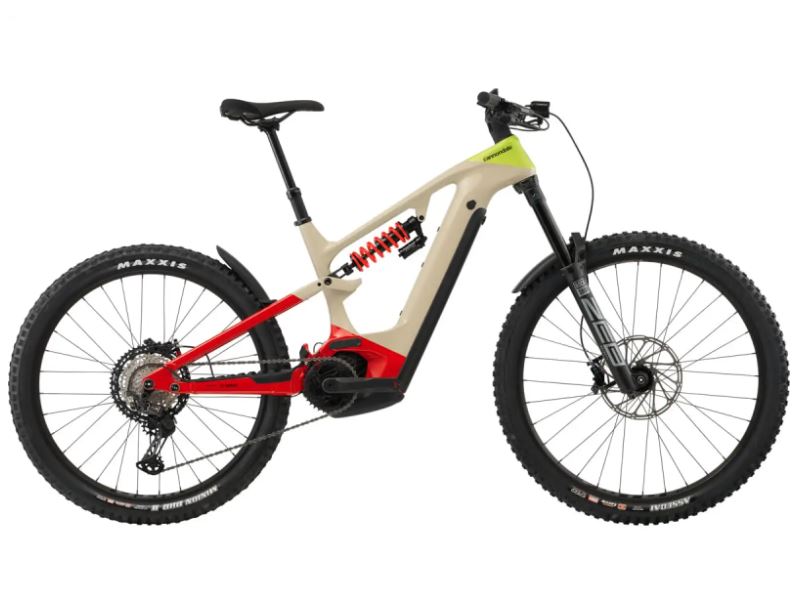
The most playful and rugged e‑bikes are the full-suspension models. Front and rear suspension with wide tires make them ideal for terrain riding. You’ll also enjoy excellent comfort and a soft saddle. Designed for challenging terrain with emphasis on performance and endurance.
A special subcategory is the lightweight full‑suspension e‑bikes, focused on maintaining off-road capability while offering agility and lighter components.
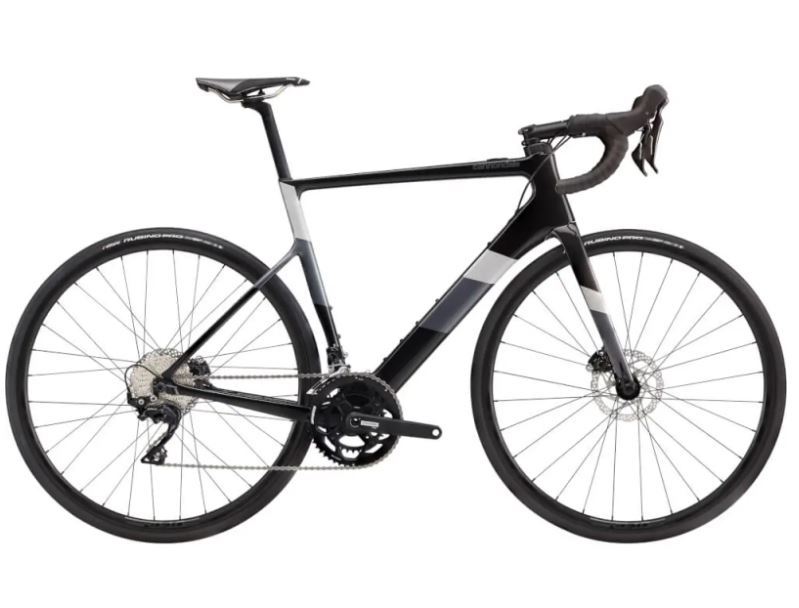
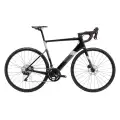
Road e‑bikes with mild assistance are designed for speed across all terrain profiles. Their sporty riding position, low resistance, and lightweight design are their greatest strengths.
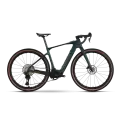
Looking for something faster but still capable on rougher paths? A gravel e‑bike is the perfect compromise—neither road nor mountain, but a versatile middle ground.
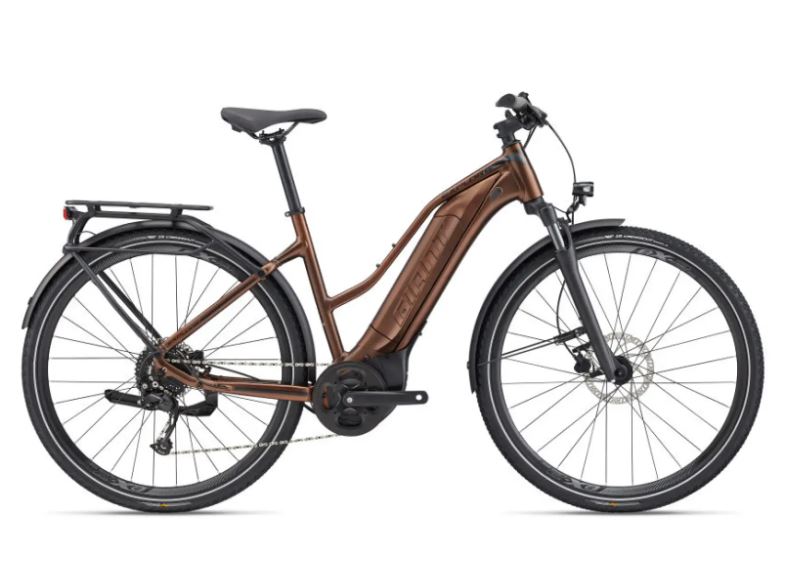
A frequently requested segment are trekking e‑bikes. They come with full accessories for riding on paved terrain. Standard equipment includes rack, lights, fenders, and kickstand. Longer range and stronger motors are typical in cross e‑bikes.
City e‑bikes provide comfort, often with low-step frames and designed for urban environments.
Each motor manufacturer offers several variants based on usage and the level of assistance (torque) provided. However, you shouldn’t judge solely by torque numbers. Other factors include whether the system is closed (display, motor, and battery from one brand) or open (components from different manufacturers), whether it’s 36 V or 48 V, and what level of assistance is offered. Generally, higher-spec systems cost more. For simplification, here’s a basic overview:
Today’s e‑bike batteries commonly range from 500 Wh to 900 Wh. This capacity largely determines how far you can ride. Keep in mind that larger batteries are heavier and more expensive—smaller ones may require carrying a charger. No two riders get the exact same range, but comparison is essential.
For reference, the following are estimates for a woman weighing 60 kg and a man weighing 100 kg, using a mid-level 720 Wh battery with moderate assistance:
Of course, range depends on several factors. The most important are:
For better clarity, every e‑bike listing includes a range calculator.
Now we come to topics common to both regular bikes and e‑bikes. Frame height and wheel size are almost identical for both categories. For a quick size estimate, the table below may help. However, every manufacturer has their own size charts, which may differ from this. Therefore, if possible, try the e‑bike in person (you can always arrange a test ride at our stores to be sure).
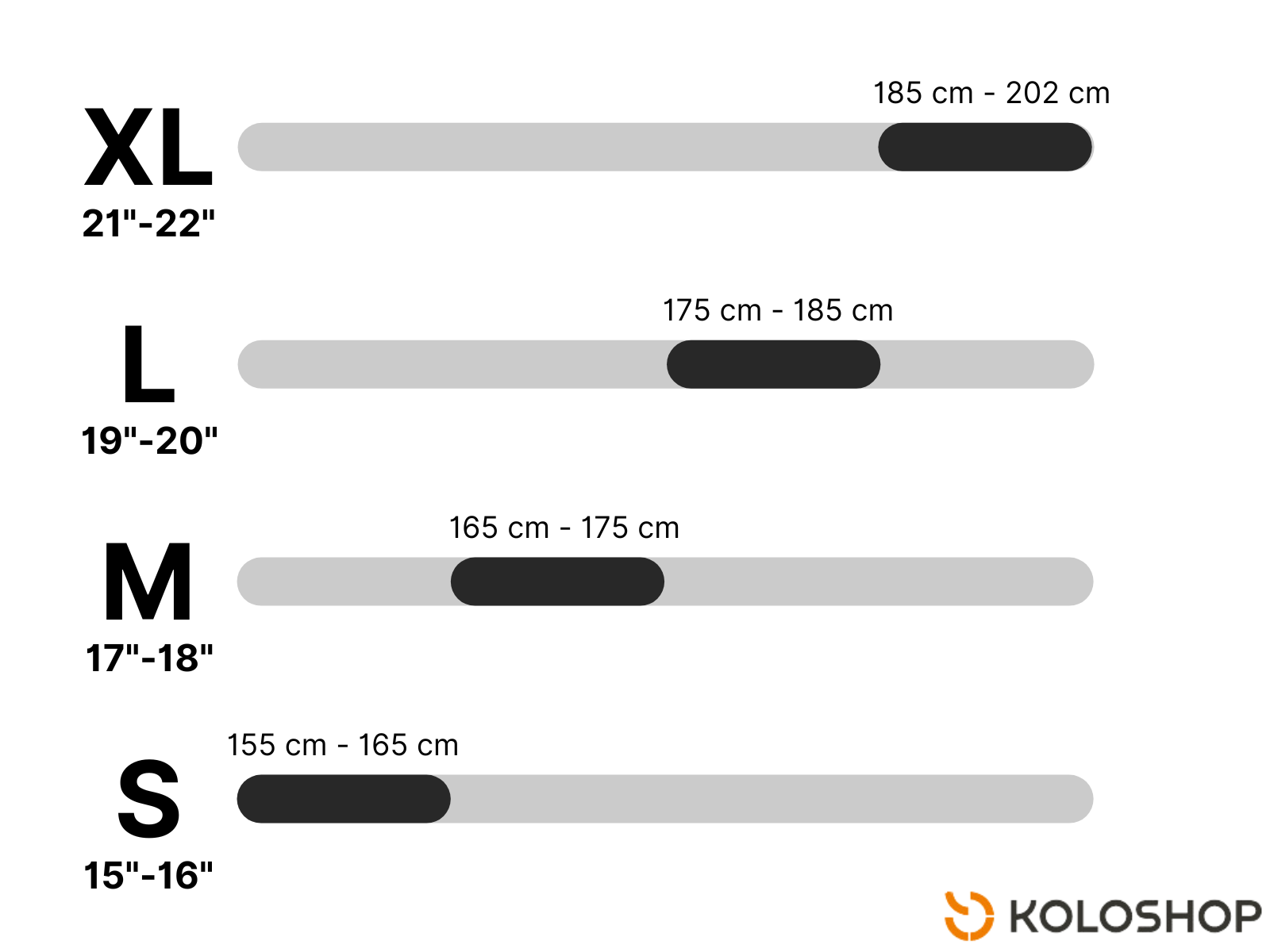
If the store is far away, don’t worry — by adjusting the saddle position, choosing a seatpost with offset, changing stem length or handlebars, we can almost always achieve the ideal riding position to prevent back pain, numb fingers, and practically all unpleasant symptoms caused by poorly set posture.
If you are between two sizes, from experience we can say women tend to pick the smaller frame, men the larger one.
Let's stay with frames a bit longer. There are three types of frames — called diamond (men’s) with a top tube, lowered (women’s) with a lowered top tube, and low-step without a top tube. Often, the difference between men’s and women’s e‑bikes is minimal. Especially for mountain e‑bikes, it can be handlebar width, saddle type, or color combinations. Lowered (women’s) frames are less common and are mostly found in trekking or cross e‑bikes.
In recent years, low-step (eSUV) e‑bikes have become more popular. Their advantage is often great stability combined with maximum comfort.
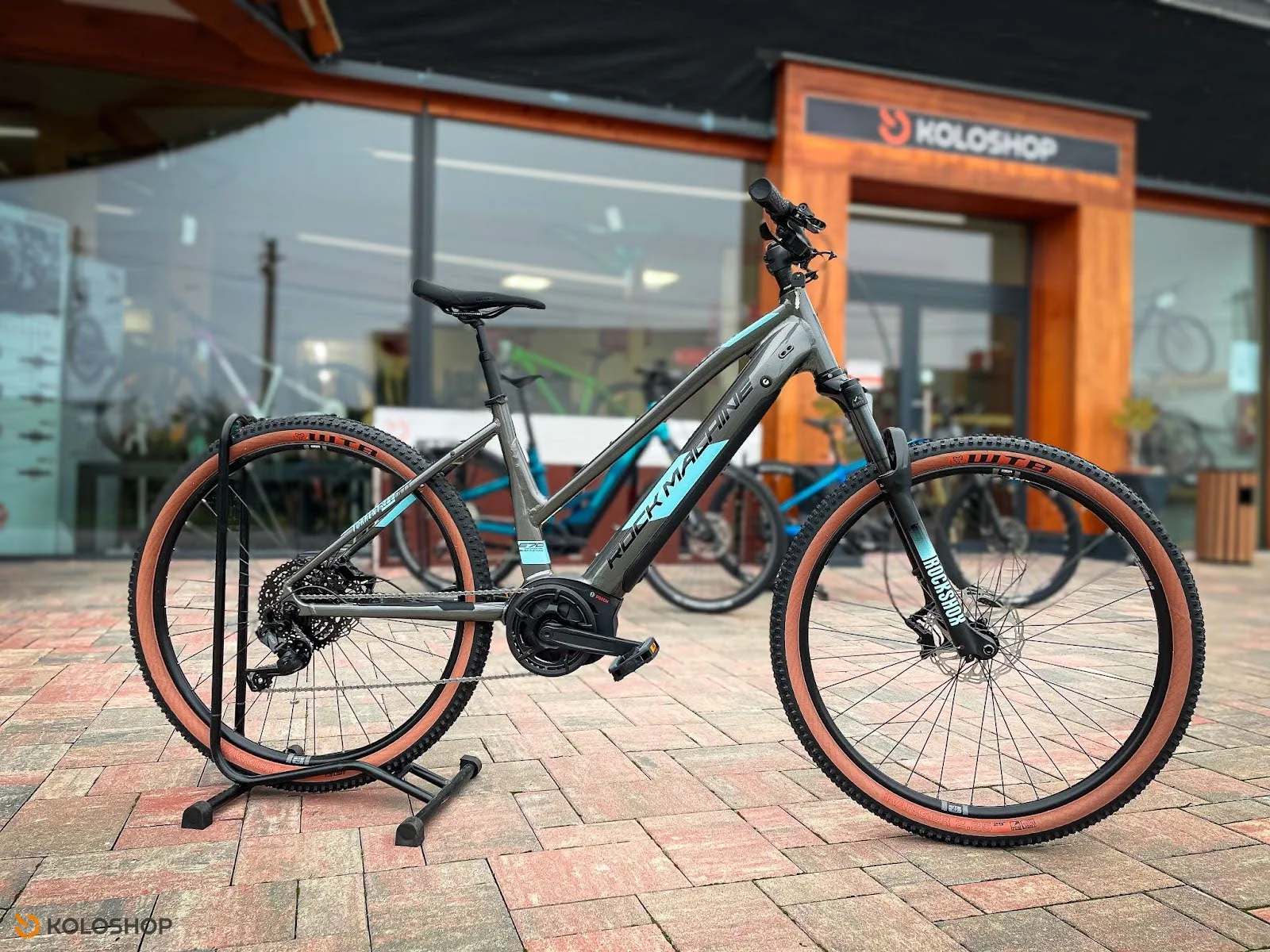
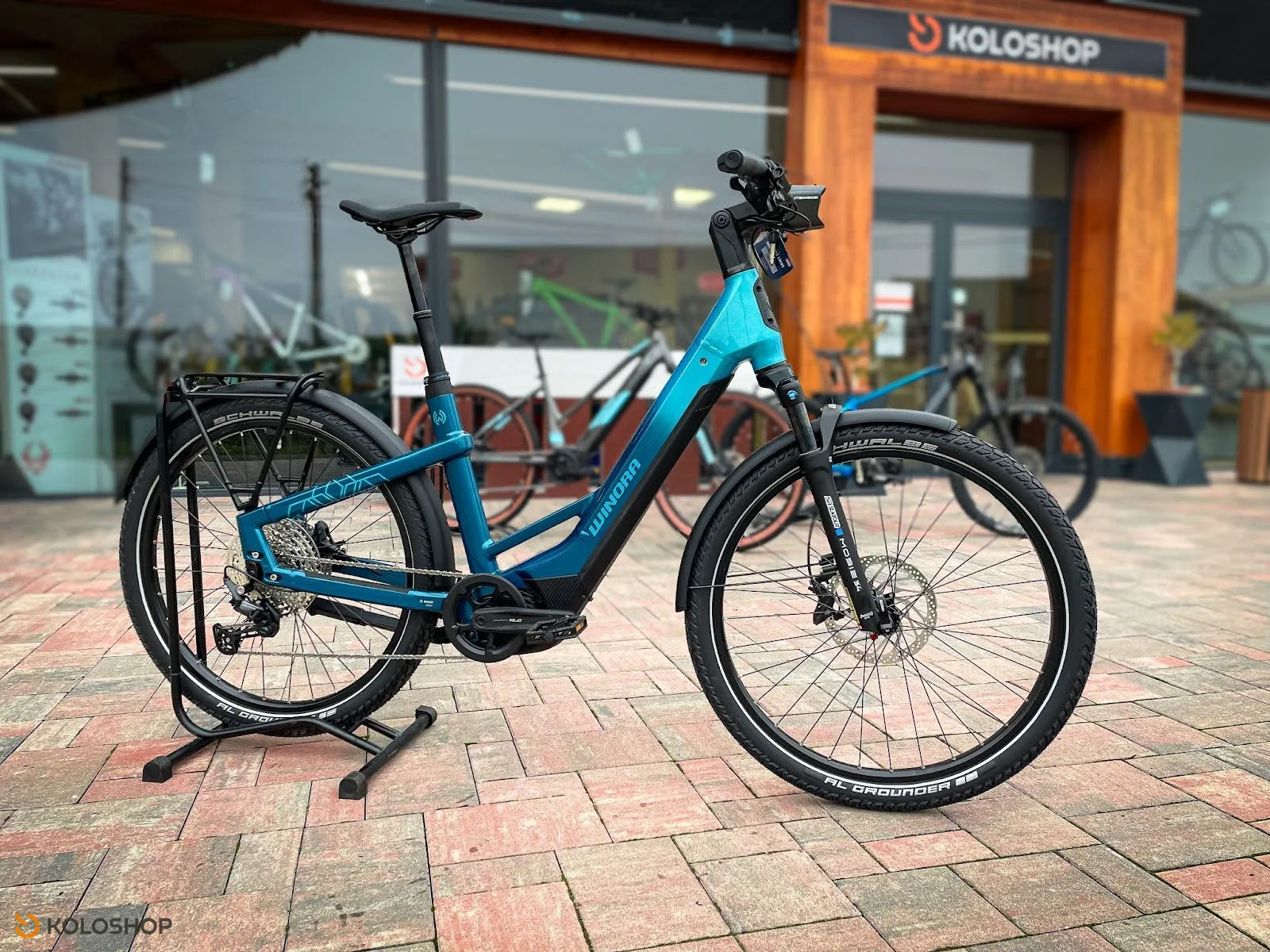
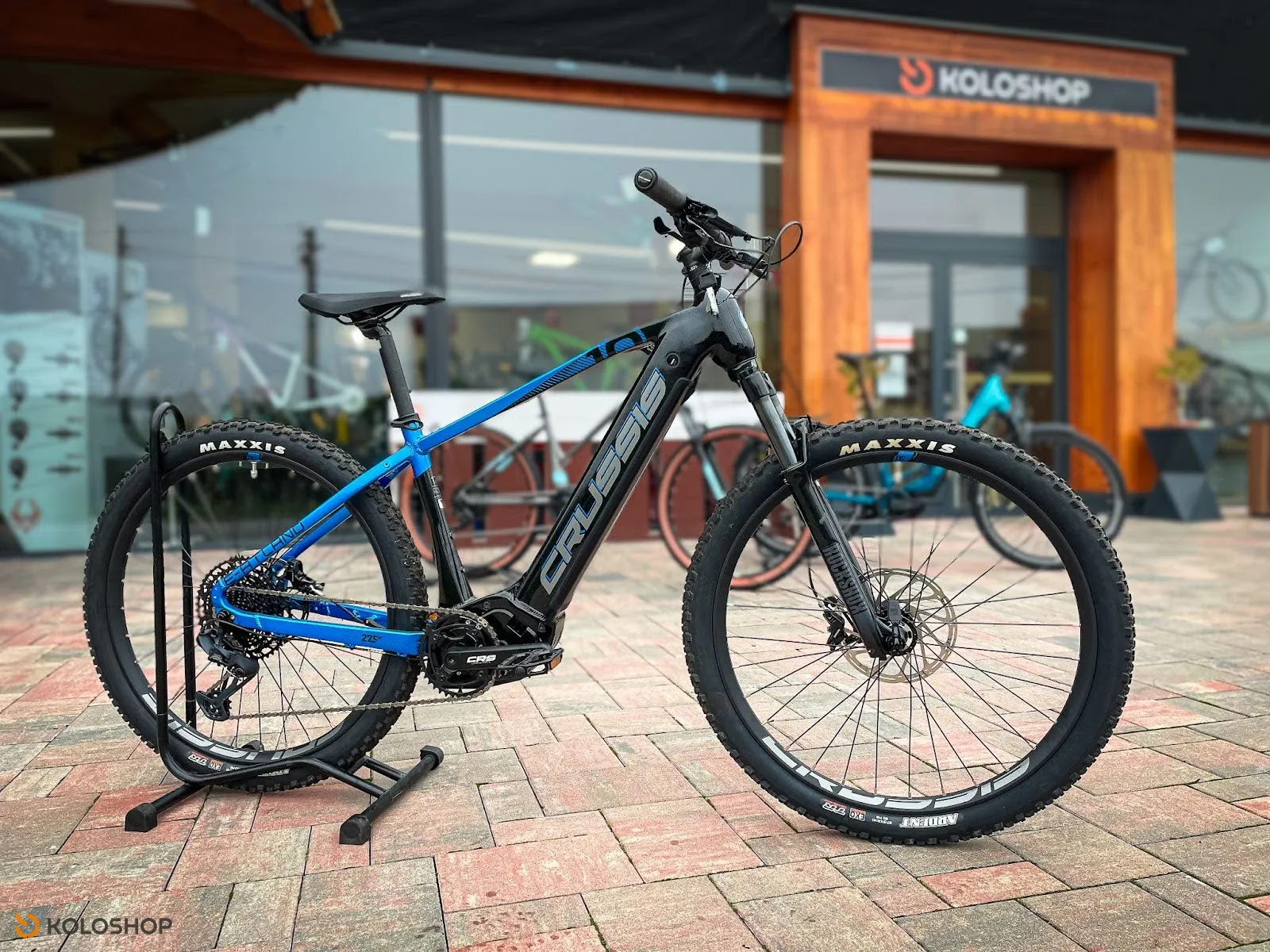
Appearance often comes first when choosing a (e‑)bike. That’s not unusual. Color options are usually more limited than your imagination. Typically, there is one color per e‑bike model. We highly recommend considering your priorities carefully. We can customize components (we can use a suspension seatpost and a suitable saddle, higher-quality brake set, derailleurs or swap the stem for an adjustable one to allow an upright riding position). E‑bike accessories offer extended options (kickstand, bottle cage, fenders, rack, etc.). As you see, many parts can be customized, but color, motor, and battery along with the frame cannot be changed.
We recommend leaving your desired price range as the last deciding criterion. You might set your expectations too high and then be disappointed by the price, or you may discover you don’t need to invest that much for an e‑bike that meets your needs.
The average retail price in 2024 is 2 500 EUR. Pay the most attention to the most expensive components — the motor and battery.
These are the most important facts to orient yourself among e‑bikes, but everyone has their own priorities and needs. If you’re unsure about the selection or the info, that’s totally fine — it’s a lot to take in. That’s why we’re here for you.
We have many years of experience selling, servicing, and riding e‑bikes and will do everything to ensure you’re satisfied. Contact us by email info@koloshop24.com.
Ladislav Suchan, e‑bike sales specialist at Koloshop

Proven quality you can trust

Handpicked and quality-checked

Our team helps you find your perfect fit

Mon - Fr: 10 am to 3 pm

We will reply within 24 hours
 Added to Cart
Why create an account?

We have sent a confirmation email to .
Open it, click on the confirmation link and you are ready to shop.
Write us with the specifications of the bike and add a photo.






![Netherlands [EUR]](/images/front/locales/NLD.svg)


 Continue Shopping


 Via Facebook
 Via Google
